
By Sally Pritchett
CEO
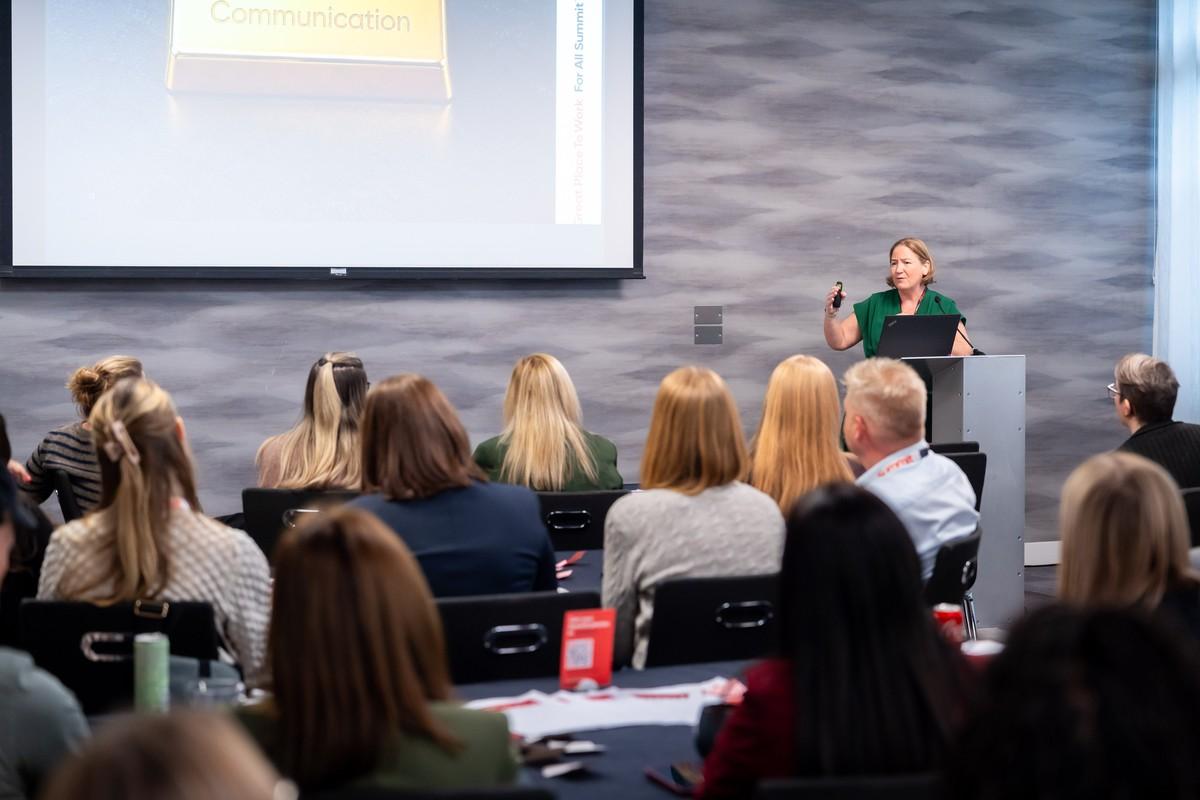
Following the Great Place To Work For All Summit, Charley Emery-Miller, ESG, Sales & Marketing Manager, explores how everyday behaviours and communication help create great workplaces.
The first day of Great Place To Work’s For All Summit in London covered everything from leadership and trust to wellbeing, AI and the future of work.
But across the conversations, one idea kept coming through: the experience of working somewhere is shaped most strongly by what people say and do every day.
A great workplace is good for people and business
We sometimes talk about culture as something almost intangible, maybe even difficult to define or measure. But a growing body of research makes a compelling case for why it matters.
Great Place To Work’s research shows that organisations recognised among the UK’s Best Workplaces generate, on average, 6.25 times more revenue per employee than the wider UK market. Employees in high-trust, high-wellbeing cultures also experience 5.8 times higher levels of wellbeing.
And it makes complete sense. When people feel trusted, valued and supported, they’re better placed to contribute their ideas, collaborate with others and navigate change. When they don’t, the consequences are felt in everything from engagement and retention to productivity.
Creating a great workplace culture is a serious business priority, with real consequences for people’s lives. But understanding why culture matters is only part of the picture. The more interesting question is what it takes to create a culture where people can thrive.
Culture is what we choose to do
Organisational psychologist John Amaechi OBE offered a compelling perspective during his keynote. His argument was that our intentions and mindsets mean very little to the people around us unless they translate into our behaviour.
We can believe we’re approachable, supportive or inclusive. But what matters to others is whether we actually listen, whether we make time for them and how we respond when things go wrong.
Suzanne McGovern, Chief HR Officer at e.l.f. Beauty, spoke about how passionate relationships, healthy conflict and mutual accountability underpin the company’s approach to high-performing teams. These aren’t simply principles on paper. They’re behaviours that need to be demonstrated and practised every day, through the way colleagues connect, challenge one another and work together.
Sarah Whelan, Director of Internal Communications at Kyowa Kirin, spoke about the importance of embedding organisational values into everyday behaviours, making them part of how people work and interact with one another.
Of course, those choices don’t happen in isolation. They’re influenced by what an organisation encourages, rewards and allows.
An organisation might champion wellbeing while maintaining always-on expectations that leave little room for work-life balance. It might encourage honest feedback but then fail to acknowledge or act on what employees have shared.
Over time, these experiences tell employees far more about what matters to the business than any values poster on the wall.
Defining organisational values is only the beginning. The challenge is creating an environment where those values influence what people actually do, particularly when decisions are difficult or priorities compete.
Turning cultural ambition into everyday experience
For People & Culture professionals, this is where the real opportunity lies. If culture is created through everyday choices, what can we do to help people make better ones?
As communicators, we can influence which behaviours people notice, understand and choose to repeat. Through stories, real-life examples and the behaviours we choose to celebrate, we can demonstrate what good looks like and encourage others to put those values into practice.
We can also give people the confidence to behave differently.
For example, in our work with Brambles, we helped make inclusion more tangible by showing what respectful, inclusive conversations could look like in everyday situations. The aim was to help employees feel more confident asking questions, supporting colleagues and connecting across differences.
Communication can also help create a culture where people feel confident speaking up, and where they can see that speaking up makes a difference. When employees see their feedback acknowledged, their concerns taken seriously and their ideas influencing decisions, it helps build the trust and psychological safety that great workplaces depend on.
Of course, that only works when organisations are prepared to act on what they hear. But when they do, communication can help people see that their contributions make a difference, encouraging the openness and trust the organisation wants to create.
The choices we make next
AI was another recurring theme throughout the Summit. We heard examples of technology being used to support employees, including career coaching and helping people navigate cultural differences. But conversations also frequently returned to AI’s impact on ever-increasing productivity expectations and the potential for smaller workforces.
Of course, efficiency matters. But as we think about how AI will change the way we work, I wonder whether we’re giving enough attention to the kind of workplace experience we want to create alongside it.
The human behaviours that create great workplaces aren’t going to become any less important as technology advances. We’ll still need to listen to one another, show care, build trust and make thoughtful decisions about how we treat people. The challenge is ensuring those things remain priorities as organisations pursue greater efficiency.
Michael C. Bush, Global CEO of Great Place To Work, closed the day by talking about the importance of hope, and the responsibility leaders have to create it.
With so much uncertainty about the future, hope matters. And the everyday choices organisations make can help give people that hope. Being honest about change, making people feel valued, giving them opportunities to grow and showing genuine care for their future all help create an environment where people can feel positive about what’s ahead.
How can we make the behaviours that build great workplaces part of everyone’s everyday experience?