

4 steps to making generative AI an ally to inclusion
By Sally Pritchett
CEO
Discover four practical steps to mitigate bias in generative AI and ensure inclusive, authentic representation in your AI-powered communications.
AI offers amazing opportunities for communicators, from writing creative content to bringing to life a visual idea in a matter of seconds. But its power comes with a challenge: inherent biases.
Generative AI has been trained on human-created content, and so has inherited deep-seated bias built in. This bias can, and often does, unintentionally permeate AI-generated content, reinforcing stereotypes and misconceptions.
So as the human hands guiding AI, what can we do to help overcome these biases and use AI as a tool to foster inclusion and authentic representation?
1. Nurturing AI as responsible guides
It’s important that we hold the hand of AI and safely guide it as generative AI learns from the language we use. We need to ensure we understand the EDI landscape ourselves thoroughly first before we can expect AI to generate outputs that are genuinely inclusive and authentically representative.
2. Navigating our human bias
The second step to making AI an ally to inclusive communications is self-reflection. We’re human, and we’re fallible, and it is important to remember that in the context of EDI. As humans, we do form stereotypes – it’s a coping mechanism and our brain’s attempt to simplify the barrage of information we encounter daily.
We must remain vigilant – consciously slowing down and actively recognising these stereotypes within ourselves so we do not bring them into our communications with AI.
3. Increasing awareness of our unconscious biases
Unconscious bias refers to the automatic attitudes and stereotypes that influence our judgments and actions without our conscious awareness. Shaped by our experiences and societal influences, these biases impact how we view others.
If you’re considering using AI within your communications, then you must understand what your own unconscious biases are. The Harvard IATs – Implicit Association Tests – are a useful tool to help you begin to do this. Set up by a collaboration of US researchers in 1998, Project Implicit aims to collect data on our biases as we learn about ourselves. We’d recommended picking a test identity characteristic you think you don’t carry bias on and one you think you do – and see how it plays out. These tests can help you identify where your unconscious biases could influence AI.
4. Learning from our mistakes
AI is still a relatively new tool for many of us – we are still learning how to get the best out of ChatGPT or how to write an effective prompt on Midjourney. We are naturally going to make mistakes as we learn how to use different AI platforms. But we must learn from these and identify where we perhaps need to reword a prompt or change the language, we are using to generate more inclusive results. By taking our time to craft prompts carefully to guide unbiased outcomes we can minimise our mistakes and foster greater inclusion.
But what about if AI makes a mistake and leans on bias or stereotypes? We can help it learn from its mistakes too! By offering corrective feedback, we can help steer AI responses towards being more inclusive.
Navigating AI together
Our ‘Navigating AI together’ workshop series has been providing a safe and open space for communicators to discuss various aspects of AI.
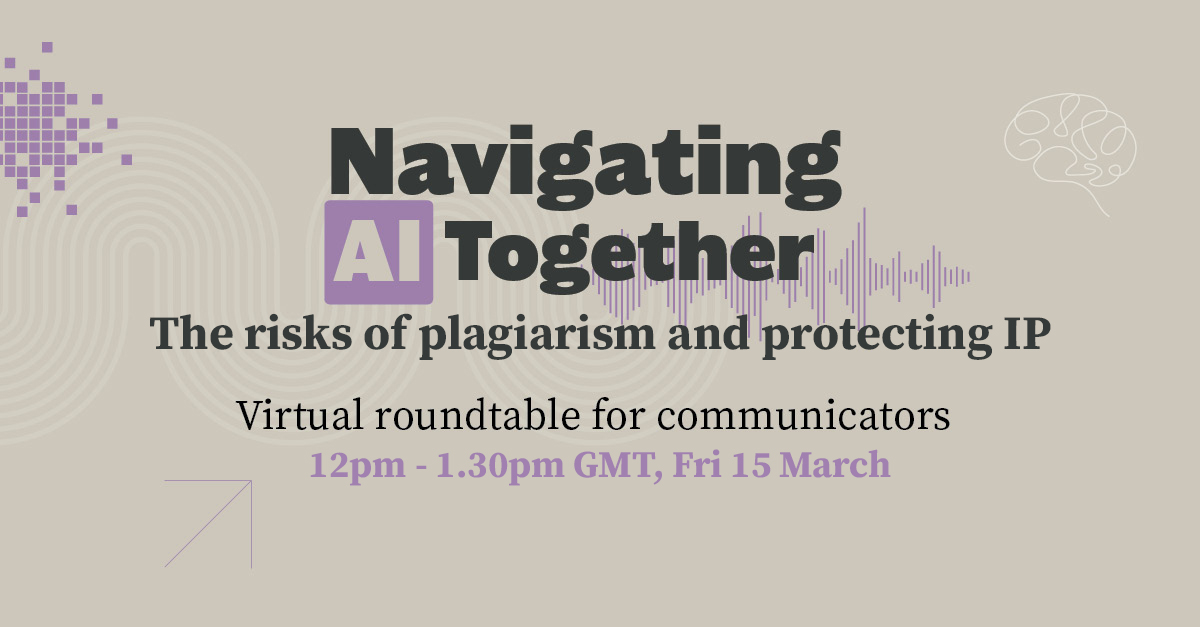
This time, recognising the pressing need, we’re focusing on intellectual property and copyright issues. It’s an area that many communicators have been struggling to grapple with, so in our next session, on Friday 15th March, we’re going to delve into it together.
We are delighted to be welcoming Alex Collinson, from Herrington Carmichael, who specialises in commercial and intellectual property law matters. Alex will lead an insightful discussion covering copyright, brand protection, confidentiality concerns, and real-world cases of AI IP infringement.


Should your business start a podcast?
By Sally Pritchett
CEO
Discover how podcasts can help you engage your customers and employees.
In recent years, podcasts have continued to grow in popularity. In 2021, over 19.1 million people in the UK listened to podcasts, and this is predicted to grow to 28 million listeners by 2026. We’re also seeing people listening to podcasts on a regular basis – 25.5% of people say they listen to podcasts weekly.
Podcasts are becoming an effective communication channel for a whole host of businesses across different industries. Just like how we now consider social media a fundamental way to engage with our customers, marketers and comms professionals are starting to view podcasts in the same way. But podcasts aren’t just relevant for your customers or external audiences, they are a great way to increase engagement with the workforce too.
So how can you effectively leverage podcasts as a communications channel for your business?
Positioning your experts as thought leaders
One of this year’s trends in podcasting is the growing demand for educative content delivered in an entertaining and interesting way, as listeners want to stay informed and be inspired. Podcasts provide an opportunity for experts in your business to reach new audiences and share their knowledge, experience, and insights in an engaging way.
Connecting through real-time interaction
Another podcasting trend growing in popularity this year is live podcasting. Providing real-time engagement and a stronger connection with listeners, live podcasting provides an opportunity to deliver truly authentic content. Listeners have the opportunity to ask questions or guide the conversation in the way they want it to go and engage with speakers on a more personal level.
Exploring your brand personality
With podcasts typically having a more friendly and informal tone, they provide an opportunity for you to bring a more conversational element to your brand personality. Whilst listeners are looking to be entertained by podcasts, many are also keen to learn something new. This presents a real opportunity for businesses to provide informative and interesting content in a relatable and enjoyable way.
Communicating with employees
When communicating with employees, it can sometimes be difficult to break through the noise of day-to-day communications. Office-based employees constantly receive emails or instant messages, whilst frontline staff may be on the road or working in the warehouse where checking these channels might be more difficult. A podcast gives you the opportunity to engage employees through a different channel, perhaps whilst they are driving or commuting.
Giving employees a voice
Podcasts don’t just have to be a way to communicate with employees – they are a great opportunity to give employees a chance to talk about the things that matter to them. Whether you invite employees to be guest speakers or start an employee-led podcast series, this can be a great way to start conversations about important topics within your workforce.
Our top podcasting tips
- Release episodes regularly. People look forward to the next episode of their favourite podcasts being released – just like they would with the next episode of a TV series.
- Make sure your podcast is available on all the most popular platforms, such as Apple Podcasts and Spotify.
- Promote your podcast via your other channels. 32% of people hear about new podcasts through social media.
- Keep the tone conversational and friendly. Listeners typically find these types of podcasts relatable and enjoyable as they can feel like a conversation they would have themselves.
- Consider bringing in guest speakers who are relevant to the target audience.
If you’re looking for support in starting your podcasting journey, we’re here to help. From communications plans to recording podcast episodes, we can provide the support you need.

Creating a more neuroinclusive work environment
By Sally Pritchett
CEO
With many citing empowering neurodivergent talent as a business imperative, discover how your workforce can behave in a more neuroinclusive way.
Embracing neurodiversity within your workforce can introduce fresh perspectives, new ways of thinking, and innovative ideas. According to Deloitte, “organizations that make an extra effort to recruit, retain, and nurture neurodivergent workers can gain a competitive edge from increased diversity in skills, ways of thinking, and approaches to problem-solving.”
With studies showing that an estimated 15-20% of adults are neurodivergent, businesses that neglect to take measures to recognise, embrace and support people who are neurodiverse, risk being left behind.
Neurodiversity isn’t a superpower. However, by empowering a diverse workforce, and creating a workplace environment where everyone feels understood and accepted, employees can feel psychologically safer and more able to share different perspectives and approaches.
There are some simple steps we can encourage employees to take to better support their neurodiverse colleagues.
So, what steps can we give our teams to help them work in a more neuroinclusive way?
In an office environment…
Reduce office overstimulation
Think about a typical office environment – bright lights, unexpected noises, different smells, lots of people moving around. This can make offices very overstimulating for many people. Consider ways you can help reduce office overstimulation. This could involve encouraging team members to take calls and eat their lunch away from the main office area, or to use headphones when watching videos.
Respect quiet spaces
If someone takes themselves away from a main office space to work it may be that they are looking for a quieter environment to focus. When someone seeks a quieter space to work, ask your team to consider popping over a quick message asking for a discussion or scheduling a dedicated time to talk.
When sharing information or tasks…
Give specific instructions
Don’t expect people to read between the lines. It can be very difficult for someone to pinpoint exactly what they need to do or achieve if they are not given specific instructions. Encourage clear and direct communication.
Avoid unclear information
We like the ‘What you need, by when, and why’ basis for giving them instructions , shared by Ellie Middleton in her highly recommended Nano Tips for Working Inclusively with Neurodivergent Employees LinkedIn Learning course. Saying things like ‘this is urgent’ but without clearer instructions can be overwhelming, as people’s perceptions of urgency can be different. Encourage your team to provide clear timeframes to help colleagues plan their time accordingly or rearrange tasks if needed.
Keep everyone on the same page
Have all processes and policies written down so that everyone has access to clear guidelines. Ensure that everyone knows where and how to access these processes and policies so they can refer to them as they need to.
Make information available
Neurodivergent people can become overwhelmed by not having enough information. Make sure all the details people could need in the workplace or for specific tasks are accessible. It can also help to provide people with the opportunity to ask for further information if they require it.
When working together…
Adapt communication styles
We all communicate with one another in different ways, and some people feel more confident expressing themselves through specific methods of communication. Encourage your team to tune in to and understand each other’s preferred ways of communicating, and adapt to these styles where possible. For example, when asking for ideas or feedback in a meeting, you could also give people an opportunity to share their thoughts via email after the discussion.
Embrace diverse work styles
It’s important to recognise and appreciate that people have varied work rhythms. By focusing on outcomes, instead of the way someone reaches that outcome, people can feel more comfortable working in a way that helps them deliver their best work.
Share information early
Help everyone prepare by always sharing meeting agendas and information in advance. This gives people a chance to digest the information they need to understand and feel comfortable and confident when they get into a meeting.
Pop over a message before calls
Unexpected calls or meetings can disrupt people or cause them to feel unprepared for or anxious about the incoming call. Suggest that colleagues send a quick message before making calls to help ensure a productive conversation, and give people time to prepare for and get into the right mindset for the call.
Neuroinclusion benefits everyone
As we’ve discussed, diversity brings new perspectives and ways of thinking about things. Better support of neurodivergent people can help us all to access different perspectives and approaches. A neuroinclusive environment nurtures a culture of empathy and acceptance, enhancing the workplace and strengthening teamwork.
However, reading through these tips you may have felt that they are really just some best practice and sensible suggestions on ways of working with other people. Neuroinclusive practices foster clearer communication, patience, and understanding among all team members – both neurodivergent and neurotypical. An inclusive approach paves the way for better interactions and collaboration, benefiting everyone.
Are you ready to talk about neuroinclusion?
If you want to start the conversation about neuroinclusive working with your employees, get in touch as we can support you with creating engaging communications that help nurture an inclusive workplace culture.

5 trends that we expect will shape workplace culture in 2024
By Sally Pritchett
CEO
Curious about the evolving workplace culture in 2024? Explore these five key employee priorities.
Workplace culture has a profound impact on employee engagement, productivity, and morale, so organisations must keep up with what is important to employees to help nurture a positive environment. With 45% of UK employees saying a great culture is the most important factor when looking for a new job, what should employers be looking out for in 2024?
1. Flexibility will continue to be key
The pandemic changed the way many of us work, driving a surge in the number of employees working from home. In 2023, some companies continued with fully remote working, whereas others have started to implement return-to-office policies and hybrid work options. But what could happen in 2024?
We expect to see more of a shift towards employees wanting flexibility, rather than just the opportunity to work from home. With 71% of workers saying a flexible working pattern is important to them when considering a new role, this suggests employees are looking for flexibility around arrangements such as start and finish times or where they work from too, to help them achieve a better work-life balance.
2. Prioritising employee mental health and wellbeing
We believe nurturing a healthy culture that supports employee mental health and wellbeing is one of the biggest areas of importance for 2024. In 2020-2021 alone, .
Although the effect of not prioritising employee wellbeing on productivity is clear, nurturing a healthy workplace culture is about much more than just the financial impact. In a workplace where wellbeing is prioritised, there is likely to be higher employee morale, reduced turnover, and increased job satisfaction.
3. The demand for sustainability
With Gen Z joining the workforce, they are beginning to influence workplace culture. By 2025, Gen Z will account for 27% of the workforce, so employers will need to start listening to what’s important to them if they wish to attract and retain the next generation of talent.
With 50% of Gen Zs saying they are pushing their employer to drive change on environmental issues, it’s clear that sustainability is an important matter that employers need to prioritise as part of their workplace culture initiatives. However, as well as businesses looking at organisational sustainability initiatives, part of building an environmentally conscious workplace culture involves supporting and empowering employees to make better choices in their lives outside of work.
4. Employees want to feel a sense of belonging
This year, diversity, equity and inclusion have become increasingly important in the workplace. In 2024, the focus on DEIB is set to continue. 65% of employees admit they want to feel a strong sense of belonging at work, suggesting employers need to start going further than just having a DEIB policy.
Many employees now want to feel like part of a community at work, form stronger connections with colleagues, and feel like they can be their true selves at work. To help nurture this type of culture, employers need to ensure their DEIB initiatives are accessible, thorough, and most importantly, authentic.
5. The importance of internal communications
Internal communications help keep employees informed, engaged and connected to a business. However, effective internal communications are about more than just sending out a monthly email newsletter to employees. There are many channels that employers can, and should, use to keep employees engaged with the business. This is particularly important for reaching frontline workers, where email isn’t necessarily the best way to communicate with the workforce.
As we approach 2024, nurturing a healthy, safe and thriving workplace culture has never been more important. If you’re looking for some support in developing internal communications strategies or initiatives that engage your workforce, we’re here to help.

Five AI trends we expect to see in 2024
By Sally Pritchett
CEO
Looking ahead to 2024, what AI trends can we anticipate?
This year, we have witnessed the rapid growth of AI. New platforms, applications, and software have emerged for almost every industry, including creative communications. However, in the ever-evolving landscape of AI, what trends can we expect to see in 2024?
Increased legislation
Nations across the globe are forming comprehensive AI policies in order to set regulations, drive innovative growth, and help ensure everyone can benefit from AI. As AI continues to advance, expect to see further guidelines and regulations introduced, including laws to prevent harmful content such as deepfakes. The speed at which AI evolves is set to continue in 2024, so we expect legislation will continually evolve to keep up with this new technology.
The importance of ethical AI
As AI becomes more widely adopted in 2024, we will see a continued focus on it being developed and used in a responsible way. There are already concerns about AI biases, plagiarism, accuracy, and a lack of transparency. However, despite these concerns, 73% of users trust content created by generative AI. This worrying statistic highlights how important it is that AI is used ethically. As we head into 2024, experts expect to see an increased interest in AI ethics education.
In the communications industry, honesty, accuracy and inclusivity are vital, so it’s important that we use AI in a responsible way. We believe it’s time for the communications industry to take the lead and set its own guidelines for ethical AI usage.
AI-enhanced creativity
AI is rapidly becoming a collaborative partner to people in many different job roles across a vast range of industries, including creative communications. Platforms such as Midjourney and Adobe Firefly have brought AI capabilities to the creative industry with tools such as generative fill. Whilst there is no replacement for human creativity, these tools can help creatives work more efficiently. As we move through 2024, expect to see these tools more widely adopted and new capabilities introduced.
The next generation of generative AI
Generative AI has advanced rapidly this past year, and the pace is set to continue. In 2024, generative AI is expected to advance further, from language model-based chatbots such as ChatGPT to video creation tools. Experts predict that AI applications and tools will become more powerful and user-friendly, new applications and capabilities will appear, and the difference between human and AI-generated content will become trickier to determine. Furthermore, we will start to see AI integrated into commonly used applications, such as the introduction of Microsoft 365 Copilot across the Microsoft 365 product suite.
AI as an intelligent assistant
As AI continues to be integrated into more commonly used applications and software, it is expected that it will start to become an intelligent assistant to us in our everyday work. From summarising lengthy PDF documents to grammar checking, and highlighting social media trends to researching hot topics, AI can help us work more efficiently. However, while AI offers opportunities to streamline processes and increase efficiency, we must still ensure responsible and ethical use.
Navigating AI together: overcoming bias and achieving inclusion
With the AI revolution upon us, we’ve been facilitating regular roundtable discussions to support communicators in navigating this change together.
In our next session we will examine the issue of the biases embedded in AI and explore how we can mitigate this bias and harness AI tools to foster greater inclusion and authentic representation.
Let’s continue Navigating AI Together, ensuring responsible, ethical, and inclusive AI usage in our communication practices.